
Fixed settings. Changing operations.
In the food industry, cooling is the single largest consumer of electricity: 50 to 85 % of power consumption goes to the refrigeration system. Yet most systems are controlled statically. Fixed setpoints, rigid evaporating temperatures, defrost on a timer. Set at commissioning and rarely touched since.
Cold rooms, freezers and process cooling face conditions that change constantly. How hard your plant has to work depends on your day-to-day operations: how often and how long doors stand open, how much product sits in the room, when cleaning and production peaks fall, how warm and humid the outside air is. You see the result as ice on the evaporators. That is not a fault in the plant. It is a consequence of daily operation. A control system that ignores those conditions runs inefficiently and drives up your electricity bill.
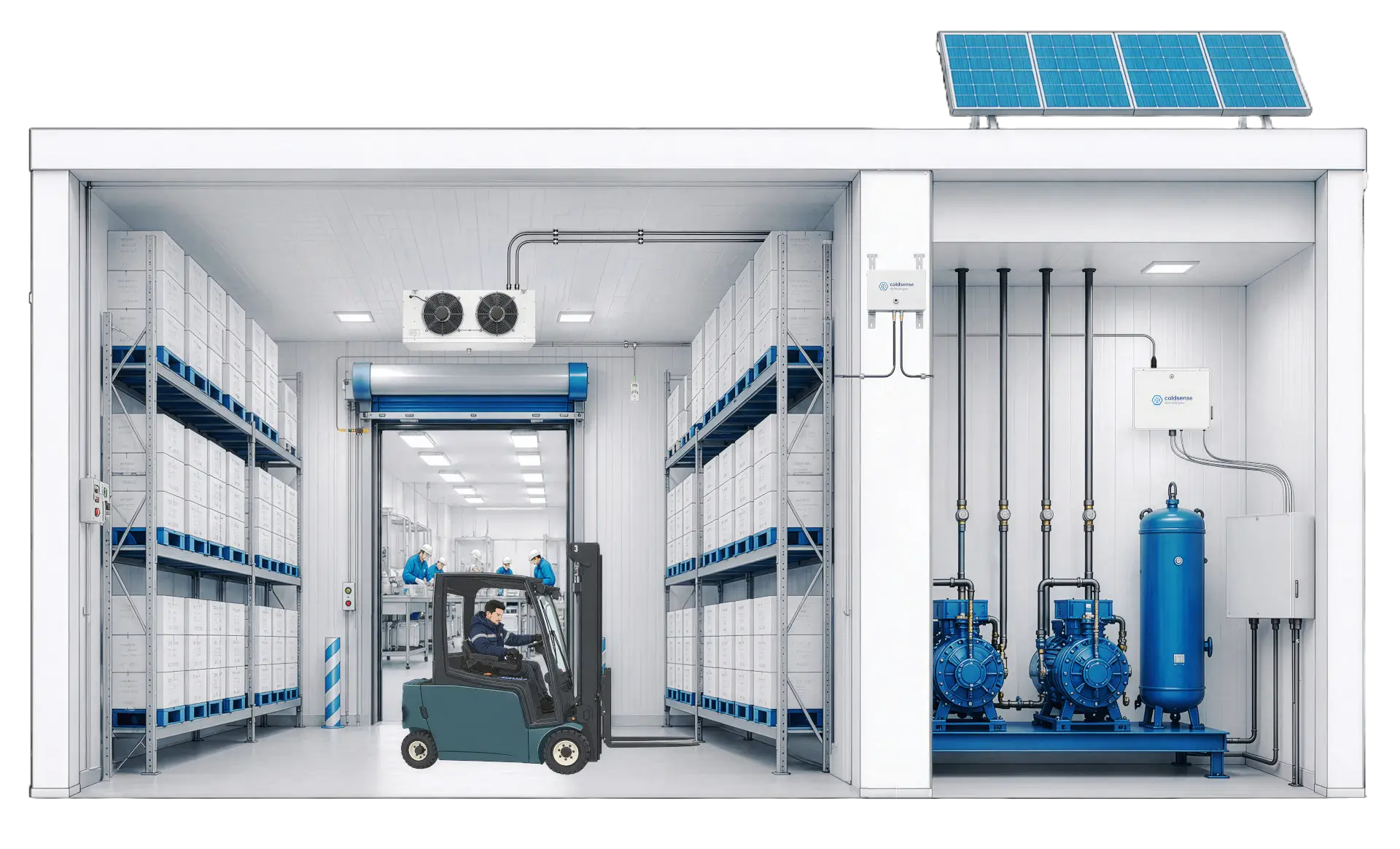

When did you last adjust your setpoint temperature?
If the answer is never, there is considerable potential in that. The hottest day in August should not run on the same settings as a calm night in February. At our customer EBÄKO, that potential amounted to up to 25 % less energy.
Our innovation: self-learning, data-driven refrigeration control
Coldsense connects sensors, data and AI into an intelligent nervous system. Temperature, humidity, ice build-up, energy flows and operating patterns combine into a complete picture of your plant. On that basis we control your refrigeration system in real time, matched to actual conditions. Every signal makes it more precise. Compatible with ammonia refrigeration systems (R717), CO2 refrigeration systems (R744) and older installed equipment.
The result: measurable efficiency gains

Up to 40 % more energy efficiency
Control follows real demand instead of fixed presets.

Up to 81 % more temperature stability
Fewer fluctuations, less ice build-up, less unplanned downtime.

Carbon footprint you can report
Lower power consumption cuts your CO2 footprint. Documented monthly for ESG and energy reporting.
Case study: 161,314 kWh less electricity in one year
A food wholesaler with four temperature-controlled areas: frozen store, freezer room, blast freezer and loading airlock. The refrigeration system had been running on fixed intervals. The site’s photovoltaic array went unused as well. Its midday output was fed into the grid instead of being stored as cold. Coldsense was retrofitted without any intervention in the refrigeration circuit and now controls defrost, temperature and energy flows according to actual demand.
Measured at the meter, documented in monthly reports:
Share of power consumption attributable to refrigeration
around 50 %
Electricity saved in one year
161,314 kWh
Annual cost reduction at 24 ct/kWh
approx. € 38,700
CO2 avoided
64.5 metric tons / year
Defrost energy in the blast freezer
up to 93 % lower
This is one example among many. Coldsense controls refrigeration systems in food production, wholesale, temperature-controlled logistics and institutional catering. You will find further case studies and figures on our industry pages.
What our customers say


The combination of CO₂ refrigeration system, photovoltaics, thermal storage, and AI-based control takes our energy management to a whole new level. Thanks to Coldsense, we optimize our cooling processes in real-time and adjust them to our logistical operations. For us as a logistics company, this represents a real technological leap.
Fabian Köhn

With the deployment of Coldsense Technologies’ intelligent defrosting system in Mensa I, which we operate at TU Braunschweig, we have taken a big step forward in this regard. The data from the door movements of our cold room has helped us to better understand and optimize our operations. As a result, we have been able to reduce energy consumption in the cold rooms by 16%.
Sabine Herrmann

Thanks to Coldsense Technologies, we have around 60% fewer defrost hours. As a result, significantly less heat and moisture enter our storage areas, which has a major impact on our energy balance. I would definitely recommend the Coldsense solution!
Robert Stiens

With Coldsense, we noticeably save energy in our chilled and frozen storage areas and significantly reduce icing. The intelligent refrigeration control system operates reliably and without manual intervention. The service is fast, personal, and dependable. For us as a food wholesaler, this is a real benefit.
Konstantin Leis

Cold storage and icing have occupied the refrigeration industry for many decades. The technology and the people at Coldsense have excited me from the beginning. The innovations created here will sustainably improve the operation of cold stores
Daniel Hattenbach

The innovative technology from Coldsense Technologies has enabled us not only to significantly reduce our energy costs but also to greatly improve our carbon footprint.
We are proud to work with a partner who is equally committed to shaping the future of the food industry sustainably.
Stefan Trapp

Energy is expensive and energy efficiency is becoming a survival criterion for many companies. Coldsense delivers great added value for cold stores with intelligent defrosting. A crucial building block for successful energy consulting in food and pharmaceutical logistics.
Michael Maschkowitz

We are very satisfied with Coldsense’s services and are happy to recommend the company. I would like to thank the team for the excellent cooperation, which we intend to continue in the future if necessary.
Thorsten Heinke
All in one: our technology and service package
Our system solution combines hardware (technology) with data-driven services. The technology package includes all sensors and materials required to monitor and intelligently control the refrigeration system. The service package covers the refinement, analysis and interpretation of the sensor data.
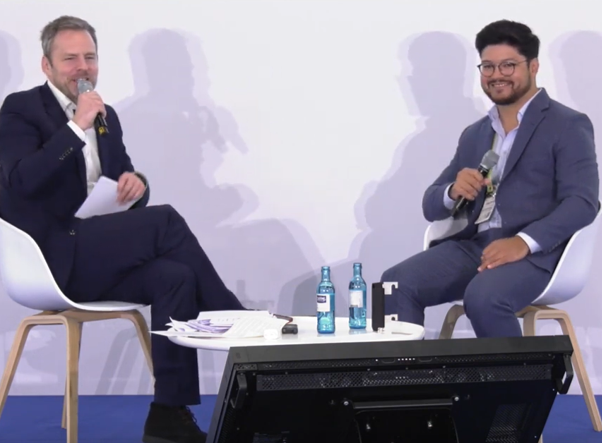
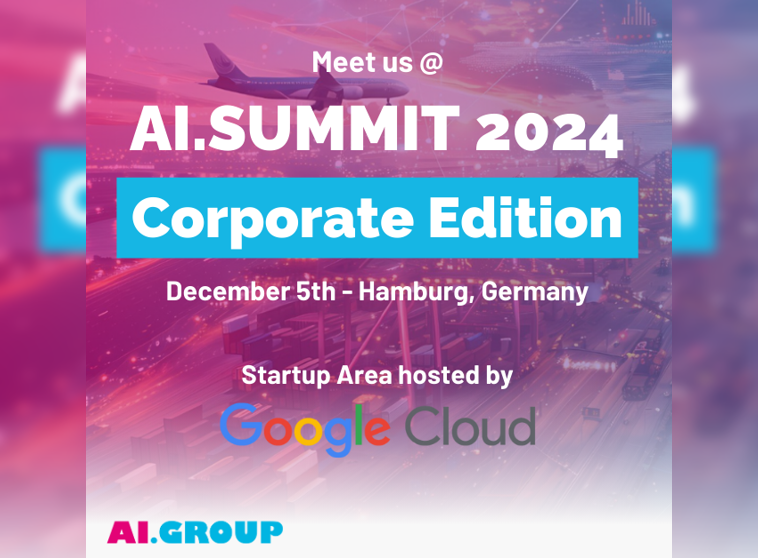
Coldsense on the road

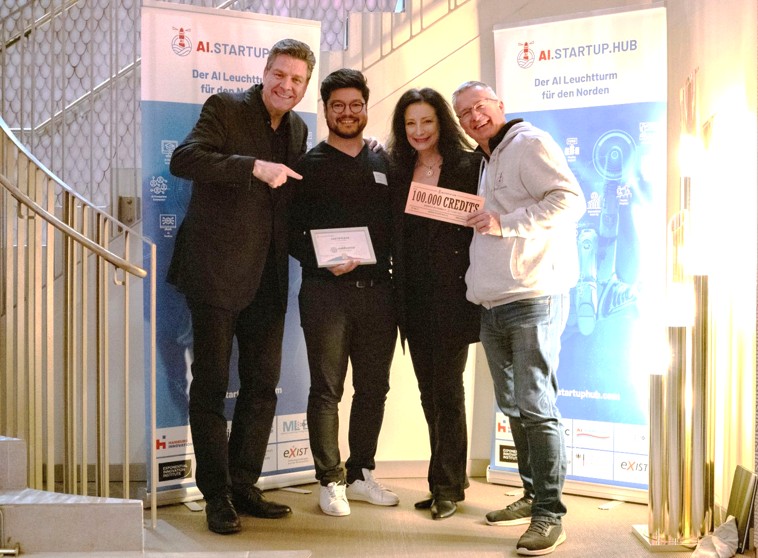

Some of our trusted clients




Our locations

Coldsense Technologies GmbH – Headquarters
Bella-Spanier-Weg 6, 20097 Hamburg, Germany

Coldsense Technologies GmbH – Italy Office
Via Giuseppe Piazzi 2-4, 20159 Milano (MI), Italy
Knowledge base

For energy consultants
Do your clients operate cold rooms? Find out why you should recommend Coldsense technology to reduce their electricity costs.

For refrigeration contractors
Do you plan and build refrigeration systems? Find out what a retrofittable, selflearning control system offers your projects and your daily work.

Blog
We share our expertise on refrigeration technology, energy efficiency and intelligent control.
How can we support you?
Get in touch for an initial conversation, with no obligation. A few details about your plant are enough — the type and number of cold rooms, the refrigerant, your approximate electricity consumption — and we will estimate your savings potential. We look forward to speaking with you.