
EBÄKO saves around 120,000 kWh of energy per year with intelligent refrigeration system control in food warehouses
EBÄKO relies on Coldsense’s expertise at its German locations in Braunschweig and Oldenburg: AI-supported adaptation of defrosting processes to operational procedures has reduced energy consumption in the frozen food warehouses by 17 per cent. In addition, Coldsense has networked PV and refrigeration technology into a smart overall system that further reduces energy costs.
Project Profile
Initial Situation
- 3 cold stores at 2 locations
- Classical energy efficiency measures had already been implemented (air curtains, demand-based defrosting, energy-efficient control technology)
Package of measures
- AI-assisted defrosting
- Coupling PV and refrigeration systems
- Energy monitoring via energy meters
Results of the measures
- 120,786 kWh less energy consumption per year
- 48.4 tonnes less CO2 per year
- 90 per cent increase in temperature stability
- 9,301 kWh of surplus solar power used for defrosting and cold storage
How can EBÄKO cold rooms be operated more efficiently?
The cooperatively organised food wholesaler EBÄKO sees itself as a pioneer in sustainability and systematically seeks solutions for greater energy efficiency – as underscored by its recent ISO 50001 certification. However, energy improvements must not have a negative impact on the quality standards required in food wholesale according to IFS Food and on delivery reliability.
Starting point: modern frozen storage facilities
Braunschweig:
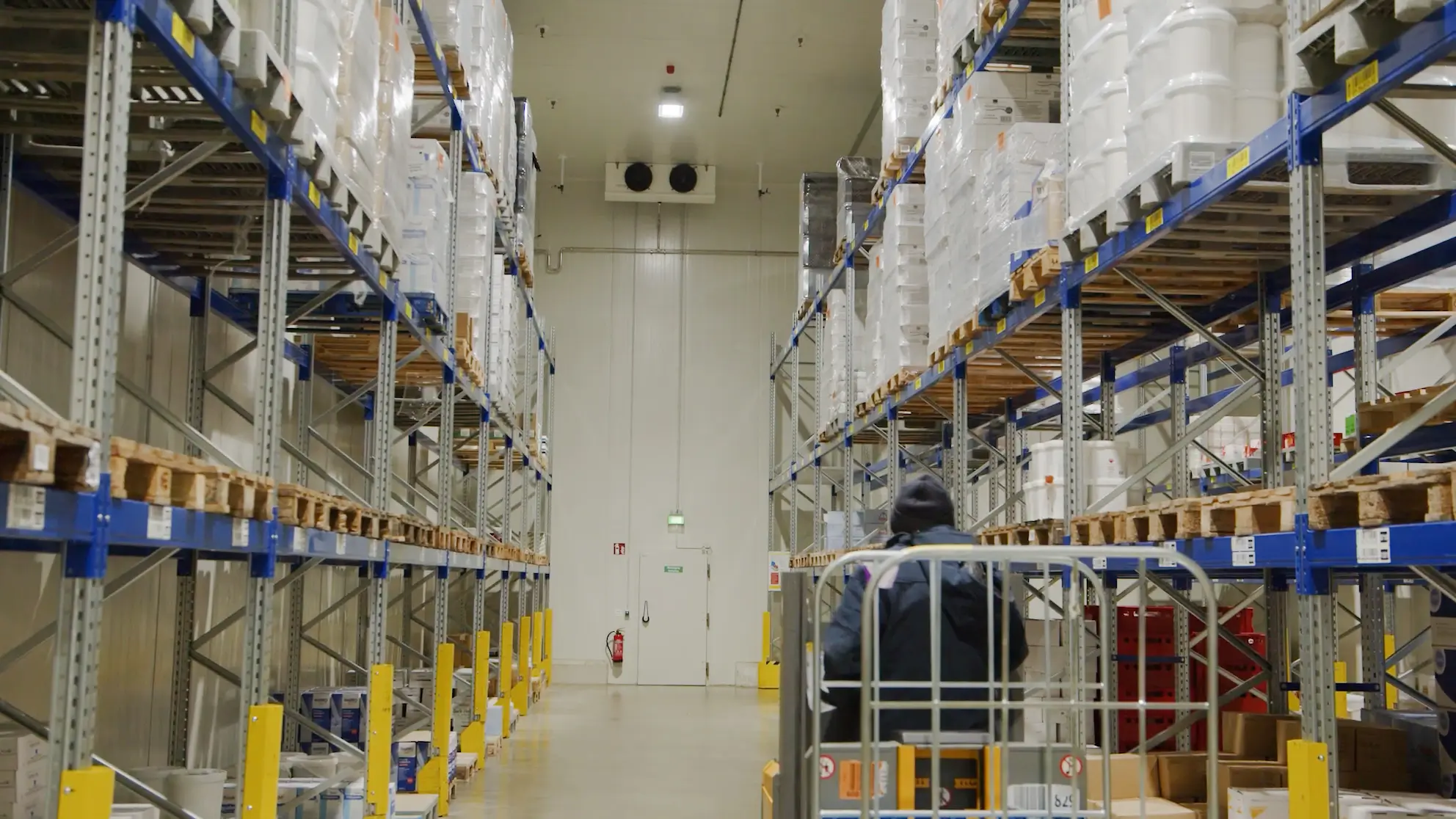
At its Braunschweig site, EBÄKO operates a 590 m² deep-freeze warehouse with high-speed doors and air curtains for additional energy efficiency. The deep-freeze warehouse is equipped with an R449A refrigeration system (cooling capacity: 98.8 kW) and four evaporators. Before implementing Coldsense technology, EBÄKO was already using an energy-optimised defrosting method known as demand defrosting: temperature sensors on the evaporator were used to shorten or skip the defrosting cycles controlled by a timer. Defrosting is carried out using hot gas. Before the project began, the frozen food warehouse’s annual electricity consumption was 135,000 kWh.
Oldenburg
The storage area in Oldenburg covers 1,200 m². The R404a system, which was equipped with a new, energy-saving composite controller in 2023, achieves a total cooling capacity of 180 kW; there are a total of nine evaporators in the two deep-freeze warehouses. Defrosting was previously controlled by a timer. Annual electricity consumption before the project began was 510,000 kWh.
The solution: AI-supported cooling control consisting of several modules
The Coldsense team carried out a comprehensive energy consultation, which revealed enormous energy-saving potential through the networking of data and energy flows. In addition to optimised defrosting, Coldsense recommended that EBÄKO use PV electricity for cooling processes and install energy meters to provide a holistic view of the sites.
Intelligent defrosting
„We were, of course, already aware that our refrigeration technology was our biggest energy consumer across all locations. However, we had no idea how much energy was used for defrosting processes – and how easy it was to reduce this and the associated costs.“
„Coldsense drew our attention to our energy-intensive defrosting processes in the cold storage rooms – a lever we had not previously identified, since the cooling rooms had already been optimized for energy efficiency,” reports Matthias Bantel, Operations Consultant and Energy Manager at EBÄKO. With the AI-based defrosting solution from Coldsense, defrosting in the frozen storage facilities is no longer carried out according to a fixed schedule, but strictly based on the actual operating conditions. To achieve this, Coldsense connects sensors, data, and AI into an intelligent system that monitors the entire cold room in real time – including temperature, ice formation, energy flows, and user behavior. A unique element of the system is the ice sensors used – a proprietary development. Unlike conventional temperature sensors, this high-tech sensor enables the direct detection of rime ice, mixed ice, and clear ice on the evaporator of the refrigeration system. This makes it possible to precisely control both the start and the duration of each defrosting cycle.

Smart use of solar power
In order to make optimum use of the electricity generated by the PV systems, EBÄKO implemented the coupling with the refrigeration systems recommended by Coldsense in a second step. EBÄKO now uses surplus energy from the PV systems for energy-intensive defrosting or stores it in the form of cold in the cold rooms. The frozen food storage rooms are then cooler than they need to be, so that the refrigeration system can be switched off for several hours.

Holistic view of energy
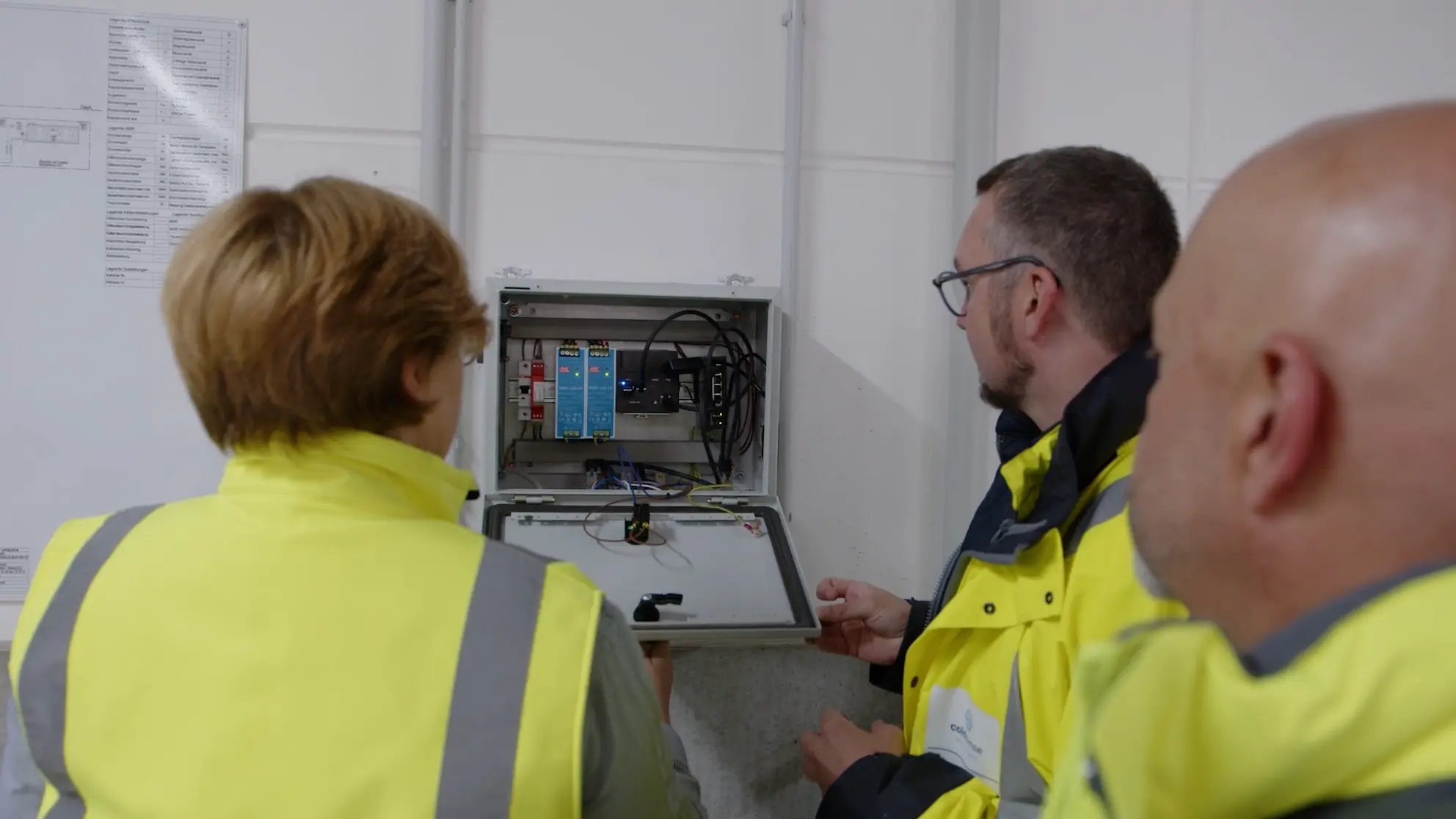
Another component of the Coldsense solution is the integration of energy meters, which EBÄKO can use to set up a transparent energy management system and further optimise energy consumption. ‘We will be rethinking our work processes – including, for example, the door opening times for our refrigerated areas. We weren’t previously aware of how often and for how long the doors are actually open. This has revealed enormous energy-saving potential, which we can now address in a targeted manner,’ explains Matthias Bantel.
Results of the measures
Energy costs drastically reduced:
Combined for both locations, 120,786 kWh of energy was saved in the TK warehouses in the 2025 calendar year. Defrosting savings at the Braunschweig location remained consistently above 60% in 2025; in October 2024, the maximum defrosting savings rate was approximately 76%. By integrating the PV system into the cooling control system from October 2025 onwards, 9,301 kWh of PV surplus could be used for defrosting and cooling storage.
Higher temperature stability
Thanks to its intelligent control system, the Coldsense system reacts dynamically to temperature deviations and peak loads in the frozen food warehouse – for example, when cold room doors are opened frequently or when utilisation fluctuates greatly. This ensures that sensitive goods remain reliably frozen and that all delivery commitments can be met even under demanding conditions. ‘With the Coldsense solution, we were able to increase temperature stability by 87 per cent and thus optimise our quality assurance,’ reports Heike Hagenstein, who works in building management at EBÄKO Braunschweig.
Outlook
Integration of lorry deliveries into the refrigeration system control
When more than 10 lorries arrive at EBÄKO shortly after midnight to unload goods in the warehouses, the refrigeration system needs to respond preventively to this logistical challenge. To this end, Coldsense has developed a module for demand-oriented pre-cooling: the refrigeration system lowers the temperature in the cooling area before the trucks arrive in order to reduce losses caused by opening the truck doors and to avoid load peaks in the refrigeration system caused by trucks docking simultaneously. The module will be implemented at the EBÄKO site in Braunschweig by mid-2026.
„We are completely satisfied with the Coldsense solution – the technology has contributed significantly to achieving our sustainability goals. I can wholeheartedly recommend working with them.“